Pollen Allergy
The timing of your allergies may provide a guide as to what you are allergic to.
Spring: tree pollens
Summer: grass and weed pollens
Late summer or autumn: mould spores
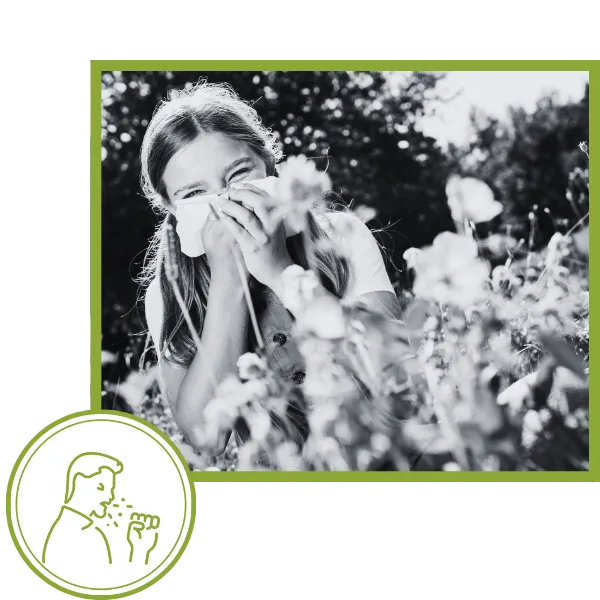
Pollens are a common cause of seasonal allergies. Around 10% of flowering plants rely on the wind to carry their pollen instead of birds and insects and these plants are the ones that people with allergies are more likely to react to. Their pollen is smaller and lighter and produced in larger quantities which can be carried over long distances from their source (hundreds of kilometres in some cases). A list of wind pollinating plants can be found in the book Healthy Home, Healthy Family. Pollens may trigger hay fever, (sneezing, congestion, itchy and watery eyes and runny nose), asthma, sinus headaches, joint pain and eczema which occur in a particular season. Symptoms maybe immediate upon exposure, or can be delayed by a few days.
Testing
A building biologist will be able to identify wind-pollinating plants around the site and recommend ways to reduce one’s exposure. For more detail, click here.
Solutions
Close windows, doors and entry points in the home on hot, dry windy days
Damp brush indoor pets before they enter the home
Do not exercise in the early morning in Spring or Summer
Wear glasses that wrap around your eyes
Plant a low allergy garden
An air filter fitted with a HEPA and carbon filter maybe helpful in the room of the allergy sufferer
Want to learn more?
Step 1: Read Chapter 2: Allergens in the Healthy Home Healthy Family book
Step 2: Enrol in the Healthy Home course
Step 3: Consider a career as a Building Biologist
COMPANY
NEWS
LEGAL


© Copyright 2026. ACES. All Rights Reserved.